📣 Cyber Threats in 2026: How Cybercriminals Target Cryptocurrencies
29.07.2026
Crypto · Security 2026
Cryptocurrency Security in 2026: How to Protect Your Funds from New Types of Attacks
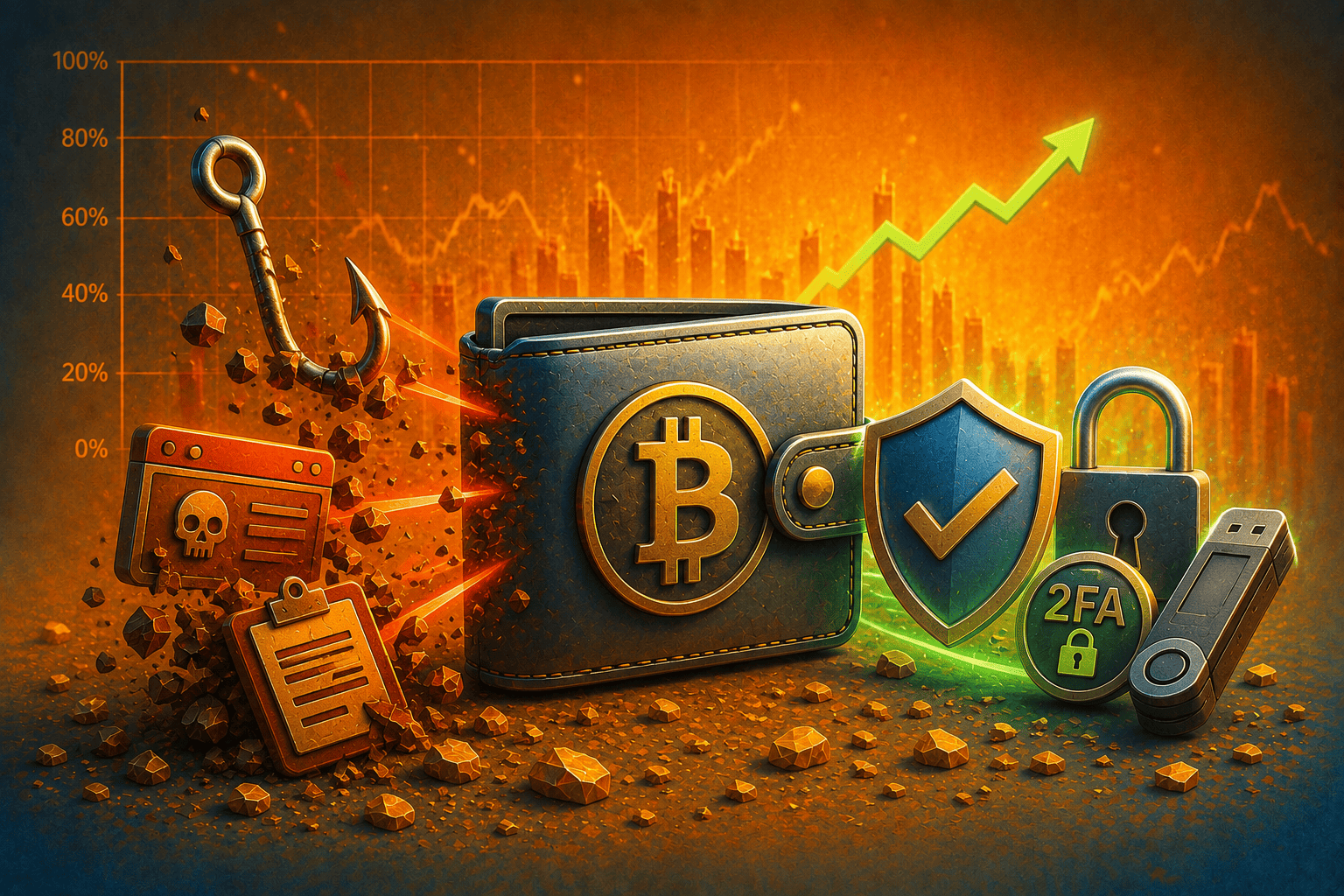
The cryptocurrency market keeps evolving, and so do the schemes used by bad actors. According to leading cybersecurity analytics firms, in 2026 the main threats to digital asset holders remain social engineering, sophisticated phishing, and clipboard address swapping (Clipboard Hijacking). To help keep your exchanges and stored assets safe at all times, we've put together a checklist of basic yet critically important security rules.⚠️ The Main Risks of 2026 and How to Counter Them
1 Address Swapping on Copy (Address Poisoning / Hijacking)
How it works Malicious software on your device detects that you've copied a crypto address and silently swaps it for a hacker's address with similar first and last characters.
✓ Protection Always check every single character of the recipient's address before confirming a transaction — not just the first and last 3-4 characters.
2 Protection from Phishing Sites and Clones
How it works Scammers create pixel-perfect copies of popular services or exchanges, with only a single letter changed in the domain name.
✓ Protection Save official exchange and wallet websites as browser bookmarks, and only access them that way.
3 Attacks via Messaging Apps and Fake Support
How it works On Telegram or other social networks, accounts posing as "support" or "administrators" may message you offering to "speed up your exchange" or "fix an error."
✓ Protection Remember: real support never messages you first, and never asks for your private keys or SEED phrase.
🛡️ Checklist for a Secure Crypto Exchange
| ✓ | Use two-factor authentication (2FA): Turn on Google Authenticator or a hardware key on all your accounts and email inboxes. |
| ✓ | Keep your software updated: Update your operating system, browser, and crypto wallets promptly — this closes known vulnerabilities. |
Your security is our priority! Our service uses modern encryption protocols and a multi-layered transaction verification system, so every exchange you make is fast, transparent, and secure.